Generative AI has created immense excitement, but also a surplus of fragile prototypes. In a corporate environment, a chat interface that hallucinates financial figures or times out during high concurrency is worse than useless — it is a liability.
Moving artificial intelligence from an interesting novelty to an enterprise asset requires rigorous software engineering around non-deterministic model outputs.
How We Engineer Production-Grade AI Systems
1. Provider-Agnostic Integration Gateways
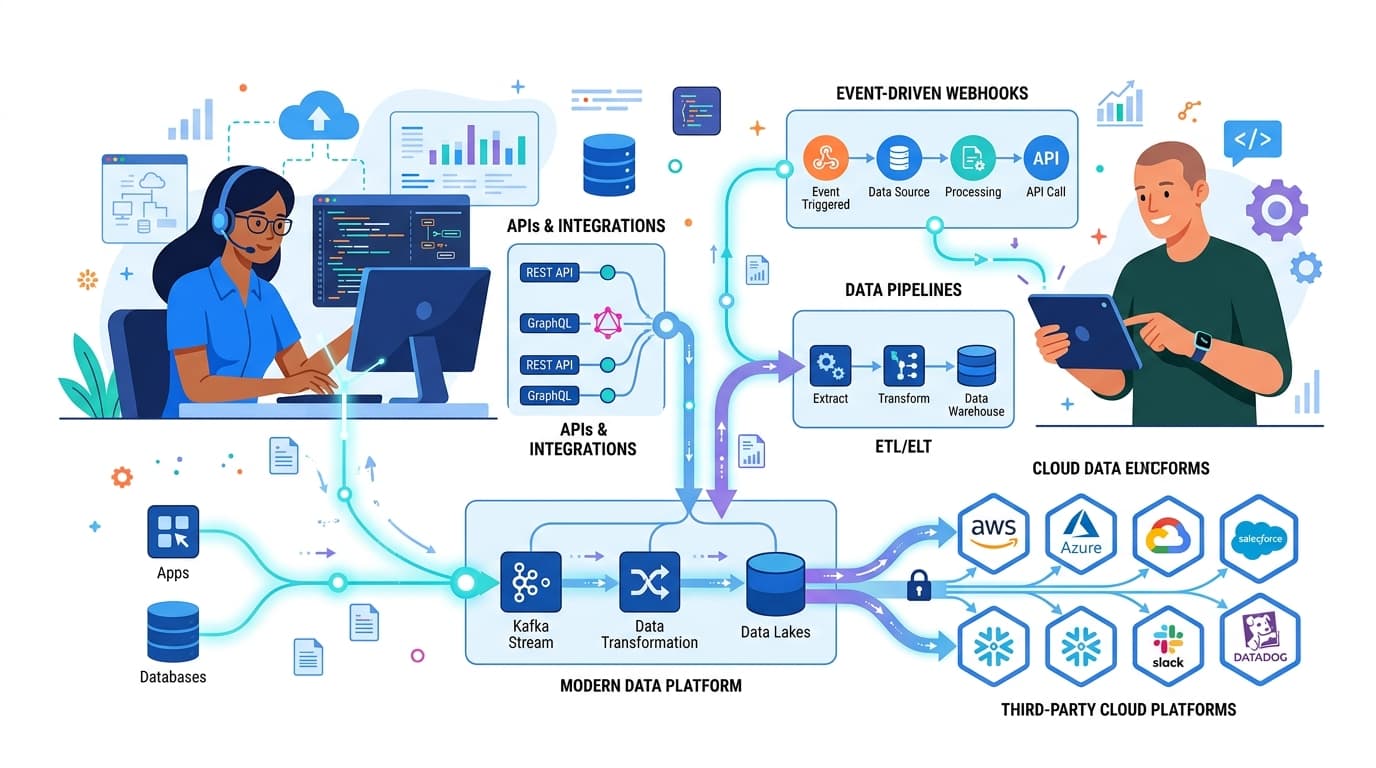
Locking an entire product into a single proprietary AI model leaves the business vulnerable to rate-limiting, sudden API deprecations, or pricing shifts. We architect abstracted AI gateways that interface with leading foundation models (OpenAI, Anthropic, Gemini, or open-weight models). If one provider encounters elevated latency, requests automatically failover to secondary endpoints without disrupting end users.
2. Low-Latency Response Streaming
Waiting 15 seconds for a complete model generation destroys user trust. We build reactive user experiences powered by Server-Sent Events (SSE) and WebSockets, streaming tokens directly into the client interface with sub-500ms Time-to-First-Token (TTFT). Users read responses naturally as they generate, maintaining conversational engagement.
3. Schema Enforcement and Structured JSON Outputs
Free-form text generation is difficult to integrate into relational databases. We enforce strict schema validation on model outputs using structured function calling and runtime validation libraries (such as Zod). When extracting customer requirements or categorizing support tickets, the model must return strictly typed JSON that passes automated validation before touching database records.
4. Guardrails, Auditing, and Data Privacy
Enterprise data must remain confidential. We configure zero-retention API agreements and implement automated sanitization filters that scrub Personally Identifiable Information (PII) before model ingestion. Every automated decision is logged with token consumption metrics, latency benchmarks, and full auditability.