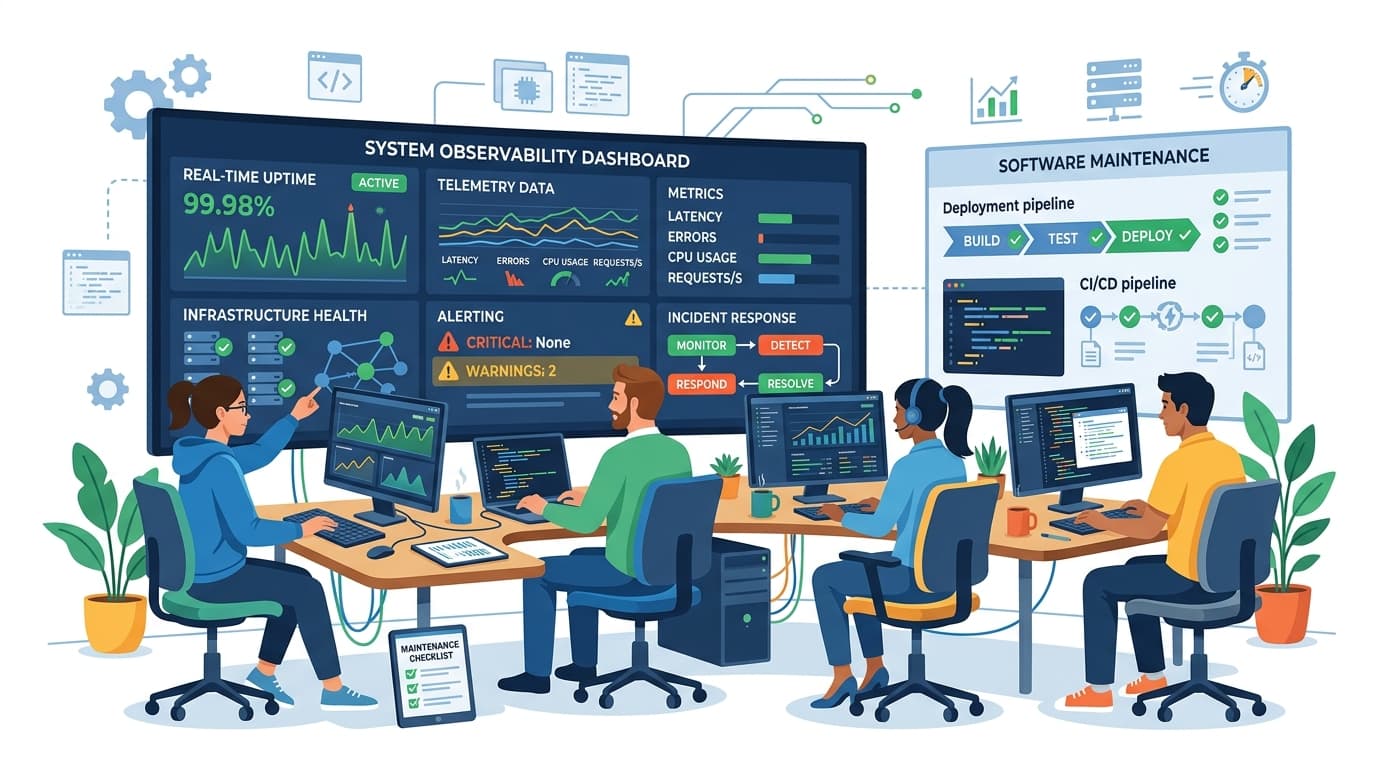
Modern web visitors expect instant responses. When a page stutters, shifts during load, or takes three seconds to display its primary heading, potential clients abandon the journey. Speed is not a cosmetic feature — it directly dictates search engine authority, user conversion, and brand credibility.
Engineering a truly high-performance web platform requires eliminating the common anti-patterns that bloat modern JavaScript applications.
The Core Foundations of Sub-Second Web Performance
1. Server-First Architecture with Next.js App Router
Client-side rendering (CSR) forces the user's device to download megabytes of JavaScript before anything legible renders on screen. By leveraging React Server Components (RSC) within Next.js, we render semantic HTML on the server edge. The client receives pristine, pre-computed markup instantly, while interactive client bundles are deferred and code-split.
2. Eliminating Cumulative Layout Shift (CLS)
Nothing degrades perceived quality faster than buttons jumping under a user's cursor as images or fonts load. We eliminate layout shift by enforcing strict aspect ratios on media containers, using font fallback metric overrides, and provisioning static layout scaffolding for dynamic feeds.
3. GPU-Accelerated Visuals and Zero-Overhead Animation
Complex ambient backgrounds, dynamic ribbons, and canvas effects often introduce severe frame drops when implemented naively. In MarineCloudX platforms, background visualizations are isolated onto dedicated composited layers or WebGL instances. By removing DOM mutations from the 60fps render loop, animations remain buttery smooth without degrading main-thread responsiveness.
4. Intelligent Cache Invalidation via Webhooks
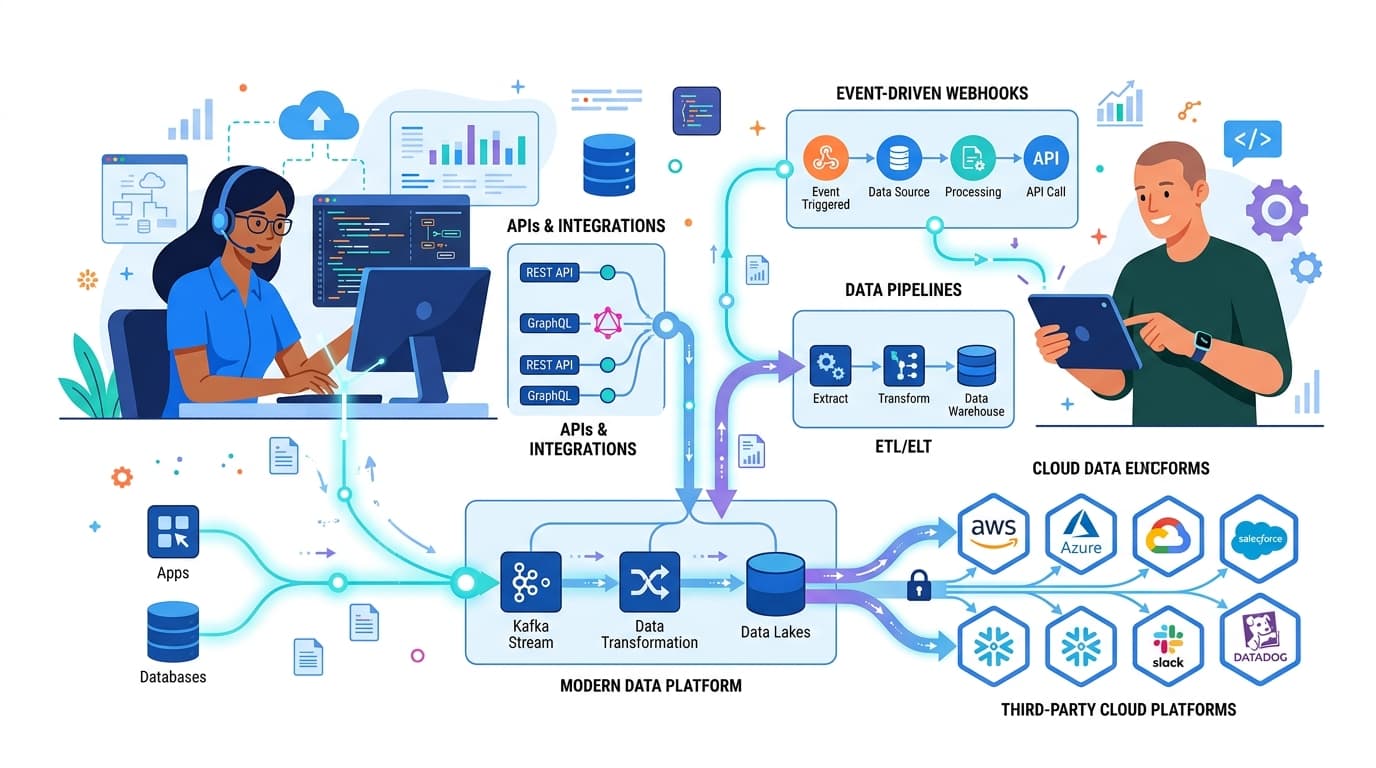
A fast site that serves stale data is broken; a site that recalculates every request from scratch is sluggish. We utilize tagged fetch caching backed by instant revalidation webhooks. When an editor publishes an update in the admin CMS, an automated webhook purges the specific route cache across CDN edge nodes in milliseconds, delivering both instant performance and real-time freshness.